HR consulting for business owners: $84,683 in ad spend over two and a half years, 13,996 leads, 532% return
Updated:
The situation and the task
The client builds turnkey HR departments for business owners in 3.5 months: hiring, onboarding, staff training, engagement. An average client brings in about $6,500 a year, and the sales cycle runs from one month to a year.
The core service is not sold straight from ads. Traffic goes into three funnels: a lead magnet download, a webinar registration and an application for a paid workshop (the tripwire). From there people move on to the main service.
The audience is Russian-speaking company owners worldwide. The target is an owner with at least 10 people on the team.
Before us the client ran Instagram in-house, and traffic dropped in the summer of 2023. Contractors in other channels made shallow creatives that didn’t hook business owners.
What we did
Counted business owners, not leads. A lead magnet download, a webinar registration and a workshop application can’t be compared directly. So for each funnel we tracked four things: how many first actions, how many of them qualified, how many reached a tripwire application, how many bought it. By the end of the first month it was clear which funnels paid off.
Found that the “useless” funnel brought cheaper clients. Lead magnets looked weaker than the webinar, but a client through them cost 30% less. We switched off direct webinar ads — they didn’t hit the cost target.
Optimized ads for qualified leads. We sent Meta only the leads that matched the profile: an owner with a team of 10+. The cost of a qualified lead dropped by 15–30% without changing the creatives.
Built creatives from customer interviews, not guesswork. The creatives running before us brought expensive, off-target leads and lots of invalid phone numbers.

From client interviews we drew up hypotheses on messaging and tested video, static, carousels and slideshows every week. Video worked best: in B2B the value has to land fast. Every 2–3 weeks the client recorded 5–10 videos to our brief, and we edited them. A new video idea was first tested in 2 days — we voiced the creative with an AI copy of the expert’s voice instead of waiting three weeks for a shoot.
Dropped the “pretty” design. Stylish, youthful banners did worse with a 30+ audience than plain ones. We also found one lead magnet topic that brought the right people 1.5 times cheaper and shifted the focus to it.
Split geos and built landing pages per country. Worldwide targeting gave the cheapest impressions but hid where paying clients came from. Simply splitting campaigns by country didn’t help — CPM went up. Separate landing pages and creatives for each region did: that let us expand geography without raising the cost per lead.
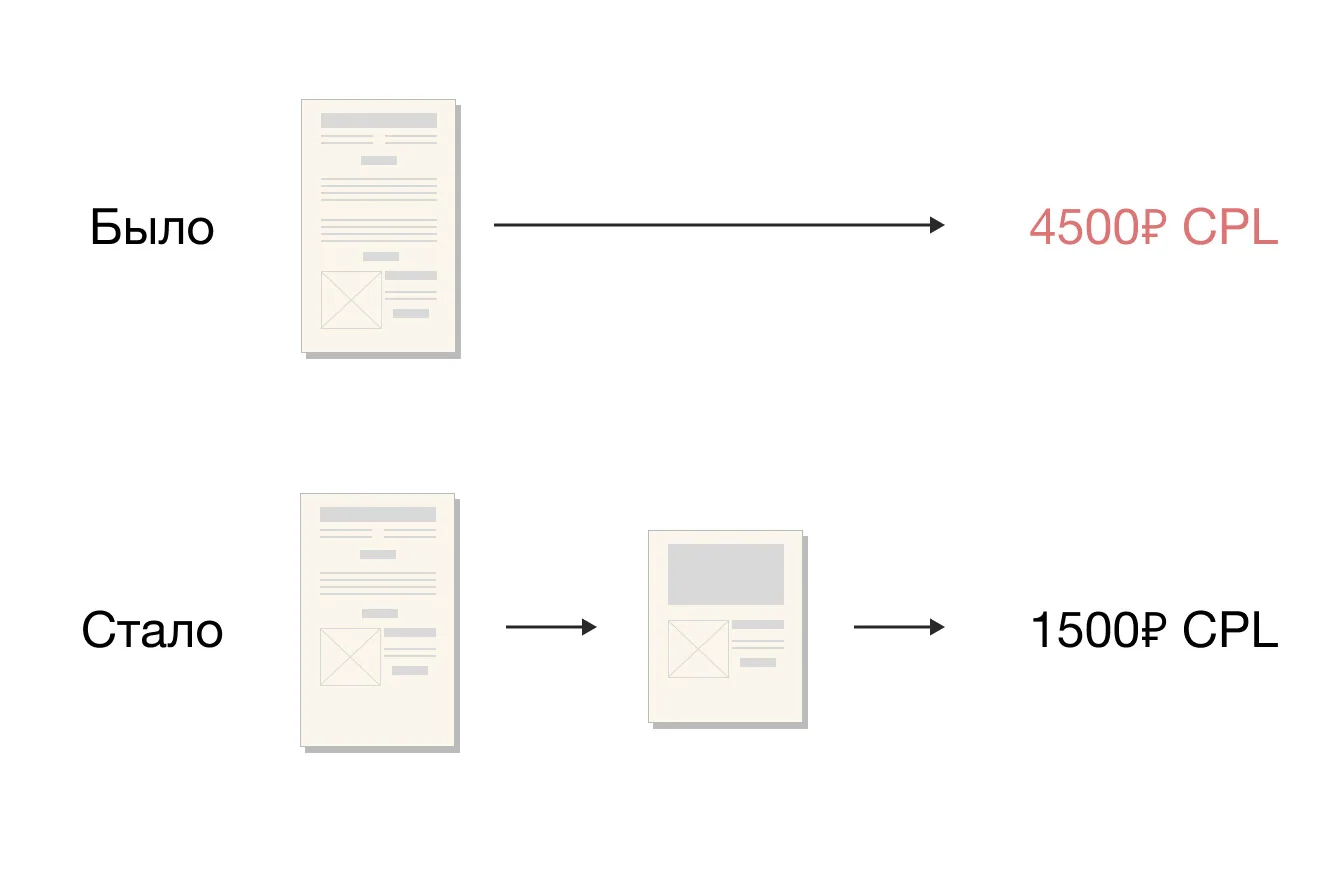
Reworked the workshop landing page with the client. We removed the price, changed the button to “Get the workshop” and added a page after the application with an expert video and a 50% discount for buying right away. The cost per application fell 3 times, and conversion to sale doubled.
Results
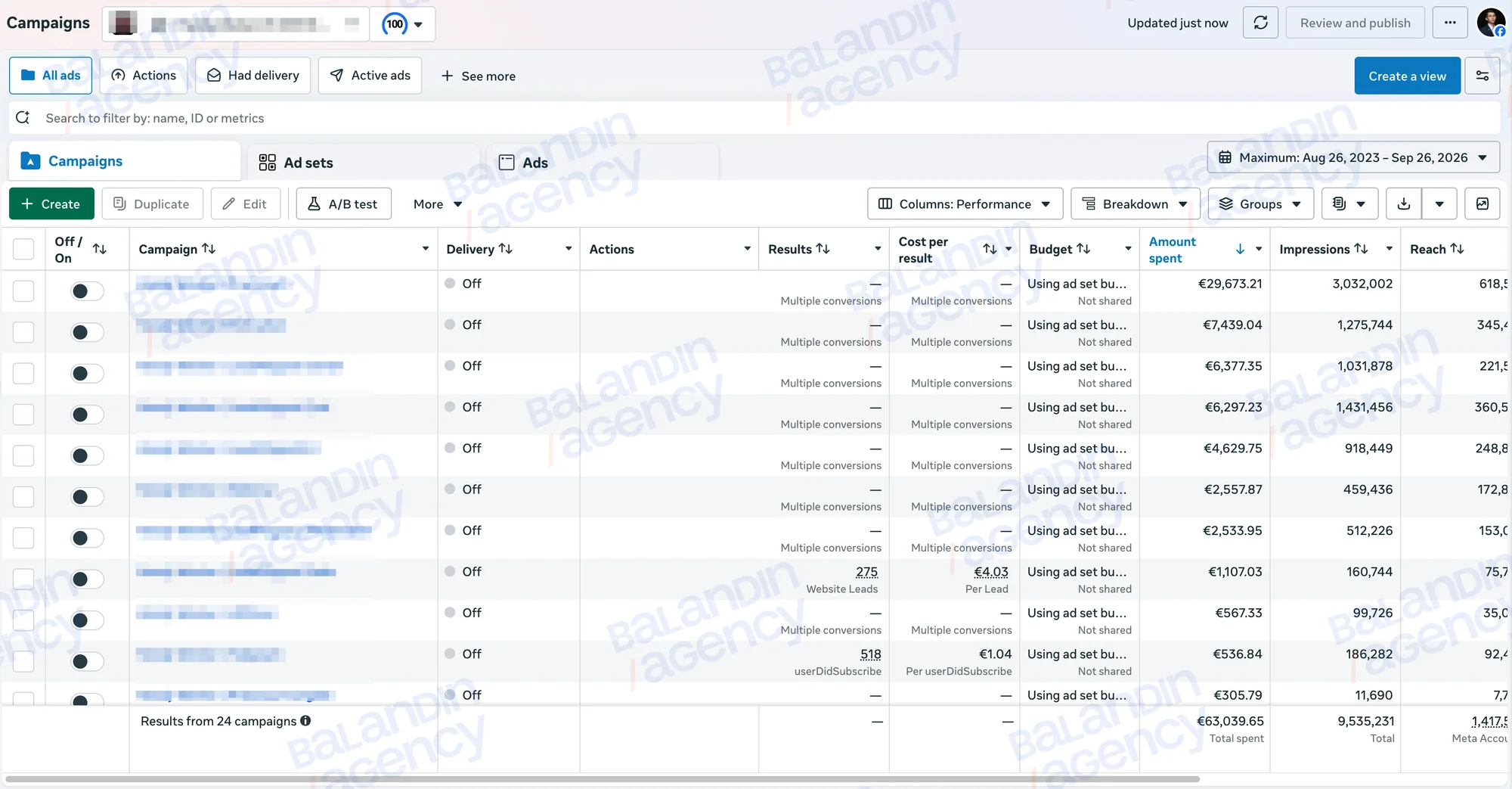
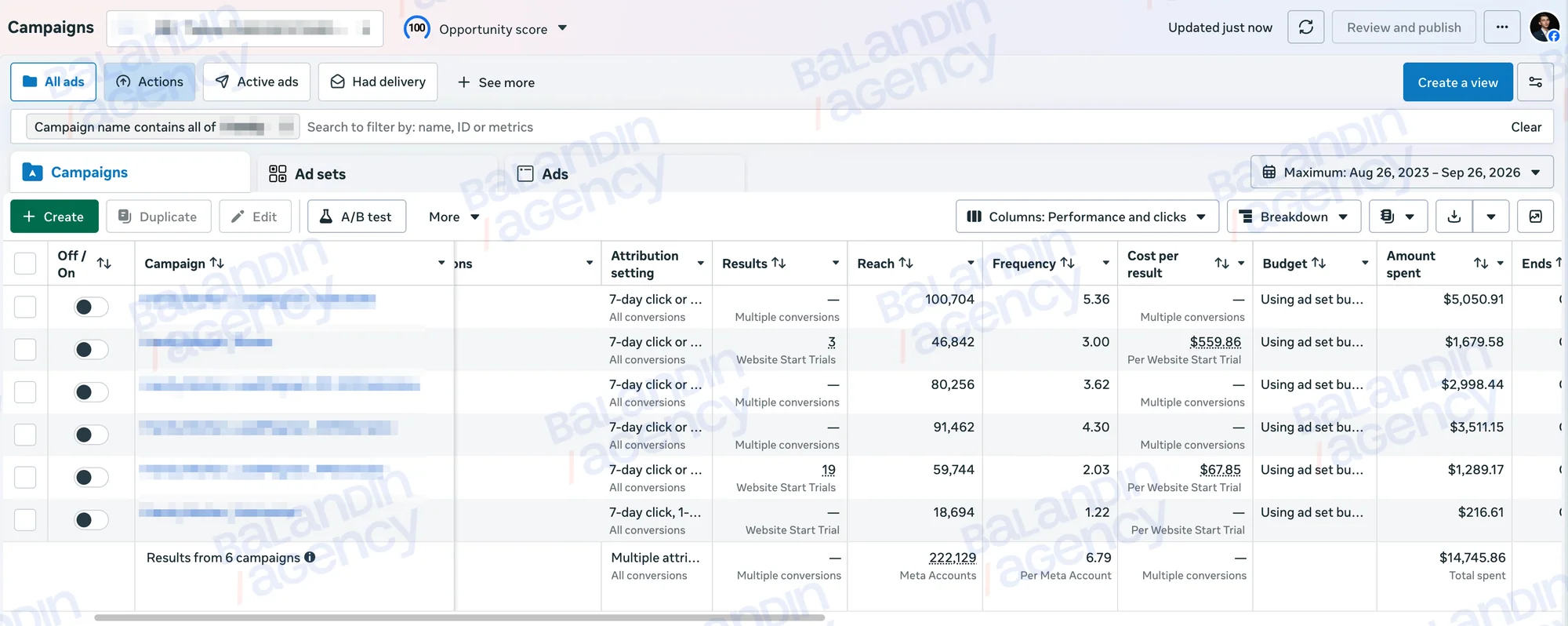
For 08.2023–01.2026 in Meta:
- Ad budget — $84,683
- Leads — 13,996
- Cost per lead — $6.05
- Return — 532%
Insights
- The first action lies. The funnel with the cheapest registration didn’t bring the cheapest clients — you have to count through to the tripwire payment.
- Sending Meta only qualified leads is a cheap lever: 15–30% off the cost of the right lead just from event setup.
- The landing page moves the cost per lead more than the creative: one rework of the workshop page cut it threefold.