OpenTable Ads and email marketing for an Indian restaurant in Manhattan (USA): $700,000 in revenue on a $23,187 budget, ROMI 2919%
How an upscale restaurant in Midtown filled its weekdays and early evening slots with OpenTable advertising and email campaigns to its own guest database
Updated:
The task
An upscale Indian restaurant in Midtown, on one of the most competitive dining streets in Manhattan.
What hurt:
- Weekdays sagged. On the slow days of the week tables stayed free.
- Early slots were empty. From 4:00 to 6:00 PM the kitchen and the room are working, but there are almost no guests.
- The guest database was dead weight. Contacts were collected but not used: they brought no revenue.
The task was to bring guests specifically into the slow hours and to build a direct channel to those who had already been to the restaurant, so as to depend less on paid advertising.
What we did
We worked in two channels: advertising inside OpenTable — a table reservation service — and email campaigns to the guest database.
- Launched both OpenTable ad formats. Boost lifts the restaurant higher in the service’s search results, and the restaurant pays for each guest who shows up. Bonus Points awards the guest bonus points for a reservation. The first format brings new people, the second motivates them to come back, so both are needed.
- Sliced campaigns by days and hours. Instead of one campaign for everything we made separate ones for the problem days of the week and time windows. Advertising worked where the room is empty, not where it is already full. Over the period there were 55 campaigns.
- Set different bids for the formats. $5.00 per cover on Boost, $7.50 on Bonus Points, $6.00 on hybrid summer campaigns. Budgets were paced evenly so that a campaign did not spend everything in the first days.
- Woke up the guest database. We sent 18 email campaigns: seasonal menus, holiday programs, win-back for guests who had not come in a long time, private dining announcements. The email platform is connected to reservations, so each email shows not opens but the guests who came and the revenue.
Results
October 2025 — July 2026.
OpenTable advertising:
- Spend — $23,187.
- Covers from campaigns — 3,874, which is 13.25% of all the restaurant’s covers over the period.
- Sales from campaigns — $490,543.74.
- ROAS in the OpenTable account — 21.16: a dollar of advertising brought $21.16 in sales.
- An acquired guest cost about $6 against an average check per guest of $133–151.
Email campaigns:
- Recipients — 324,331.
- Covers — 2,400.
- Sales — $209,432.
- Average check on email-driven reservations — about $87, with zero acquisition cost.
In total: 6,274 covers and about $700,000 in revenue on a $23,187 ad budget. ROMI — 2,919%.
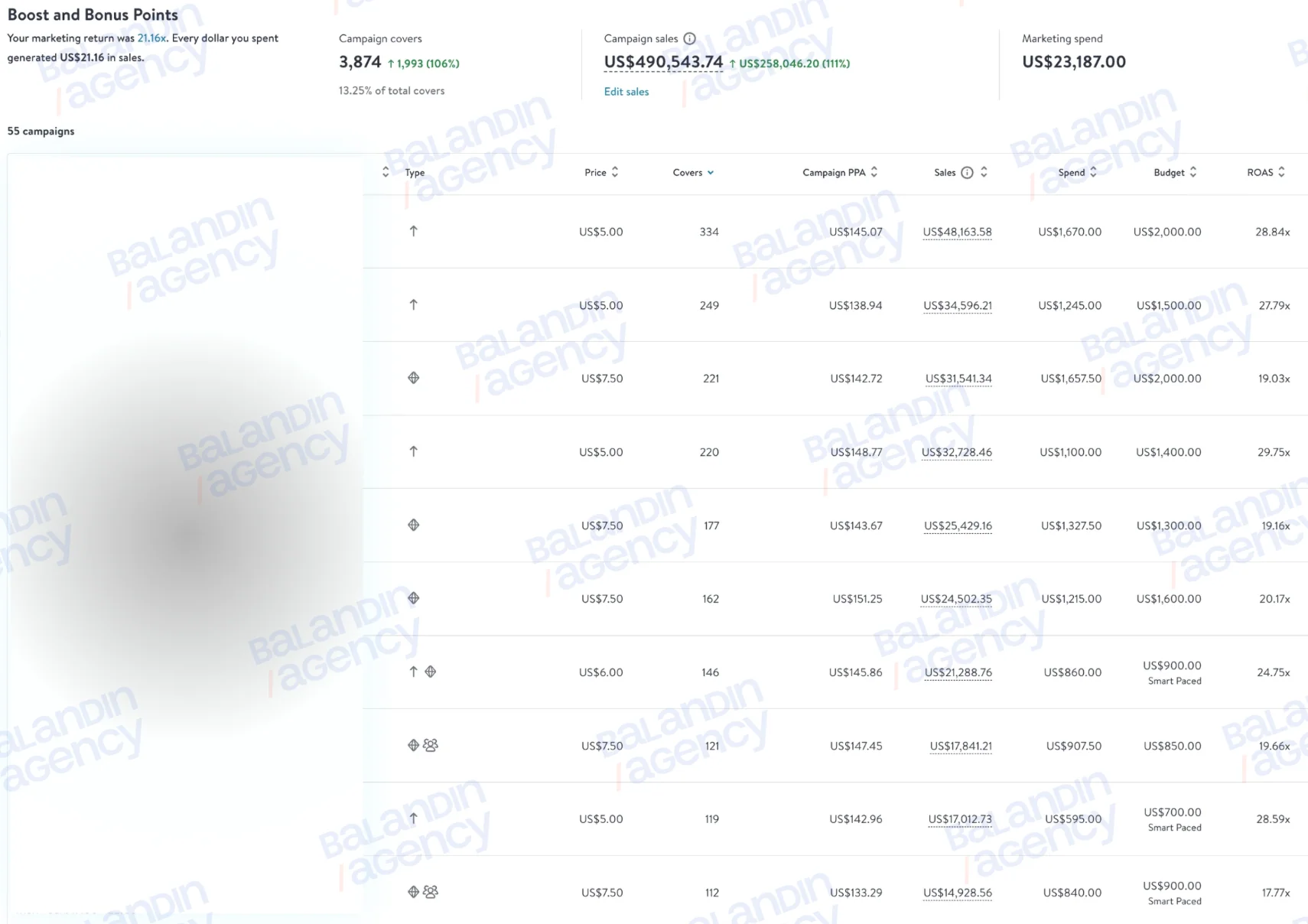
The OpenTable ad account for the period. The total is at the top, the campaigns below. An arrow marks the Boost format, the points icon marks Bonus Points. The best campaign brought $48,163 on $1,670 of spend.
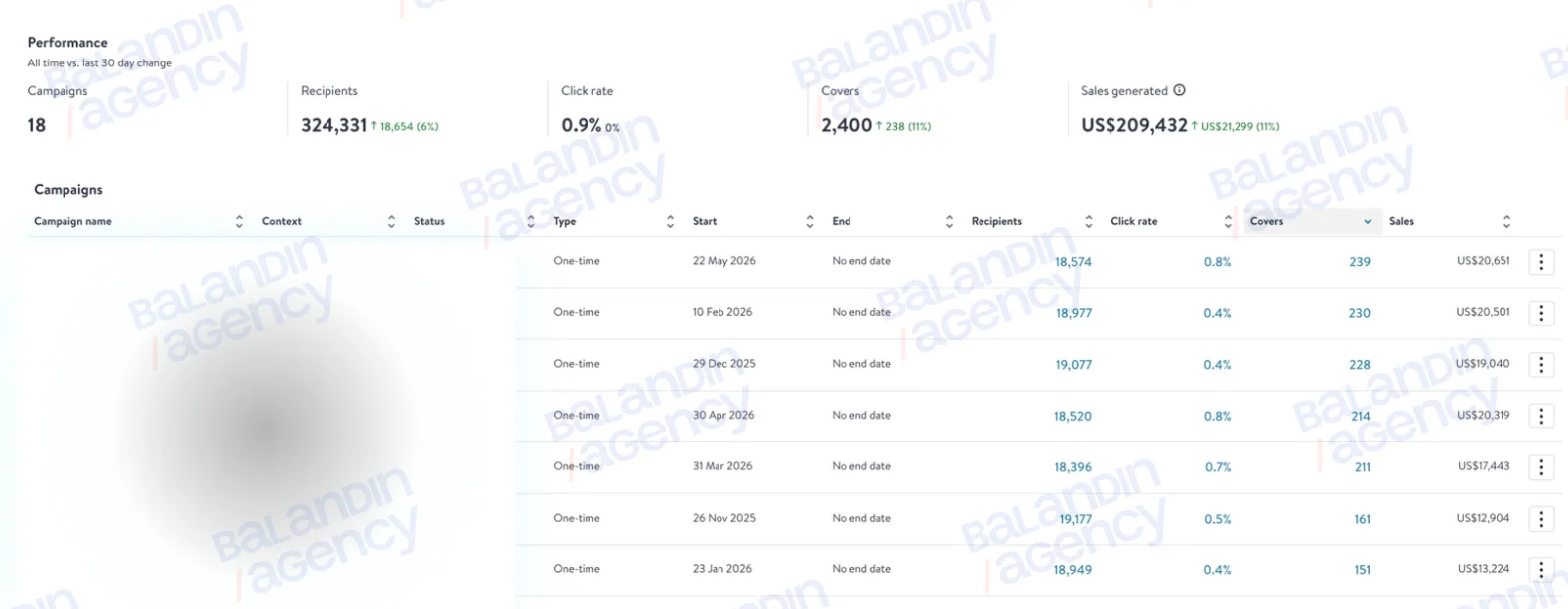
The email platform. The best emails went to about 19,000 addresses and brought 150–240 covers each — from $13,000 to $20,000 in sales from a single send.
Insights
- Boost pays back better, Bonus Points brings guests back better. Boost consistently shows a ROAS of 28–30 in the account, Bonus Points shows 19–20. The second format cannot be dropped: it works for repeat visits. The best setup is a hybrid weighted toward Boost in high season, from October to February, with Bonus Points in the shoulder months.
- Paying per guest who shows up changes the economics. The restaurant pays about $6 for a person who actually came and spent $133–151. There is no risk of paying for clicks without guests.
- The main reserve is email. A 0.9% click rate on a list of 324 thousand contacts is far below what is possible. Segmentation by visit frequency and average check plus subject-line tests will raise the channel’s revenue with no additional budget.
- Your own list is cheaper than any advertising. $209,432 in sales came from people the restaurant had already paid to acquire some time earlier.