Promoting premium hotels in the Maldives: 174 leads at $41, 4 bookings worth $92,600, 1,185% ROMI
How we promoted Maldives hotels to Russian-speaking travelers from the CIS, Europe and the Arab states, and what let us pull qualified leads below market price out of a highly competitive niche
Updated:
Situation and task
The client is a Moscow travel-design boutique: they pick hotels and build complex itineraries for people who spend $8,000+ per week. Sales came from referrals and an existing client base, the team was fully booked in high season, and paid advertising had never worked for them.
What hurt:
- The season had already started. New Year in the Maldives is booked in September–October. The client needed to “collect leads before everyone has already booked for New Year”, and there was no landing page for ads at all.
- An expensive, invisible product. Nobody searches for a $15,000–95,000 holiday by keyword: Yandex search volume for this audience is tiny, we would have had to “dig by geo-points”. The audience is on Instagram, but the risk of collecting non-qualified leads there is high.
- Nobody to handle the leads. The two founders handled everything themselves and, given their travel schedule, could take the first leads only in the window of October 7–16.
Task: build a landing page and launch Meta Ads to a Russian-speaking premium audience outside Russia within three weeks, so that leads come in with a budget of $8,000+.
What we did
- One product instead of a catalogue. We advertised not “travel design” but New Year in the Maldives at three specific hotels (Waldorf Astoria, Nautilus, Patina) with a “from” price and the saving versus Booking. A specific hotel with a price filters out non-qualified people right away and gives a clear offer.
- Landing page in 18 days, prototype and design in parallel. Brief on September 17, prototype on the 26th, design on October 3, Tilda build on October 5. The first screen went to design before the prototype was finished, to fit the client’s window. We removed the link to the Telegram channel so as not to pull traffic away from the form.
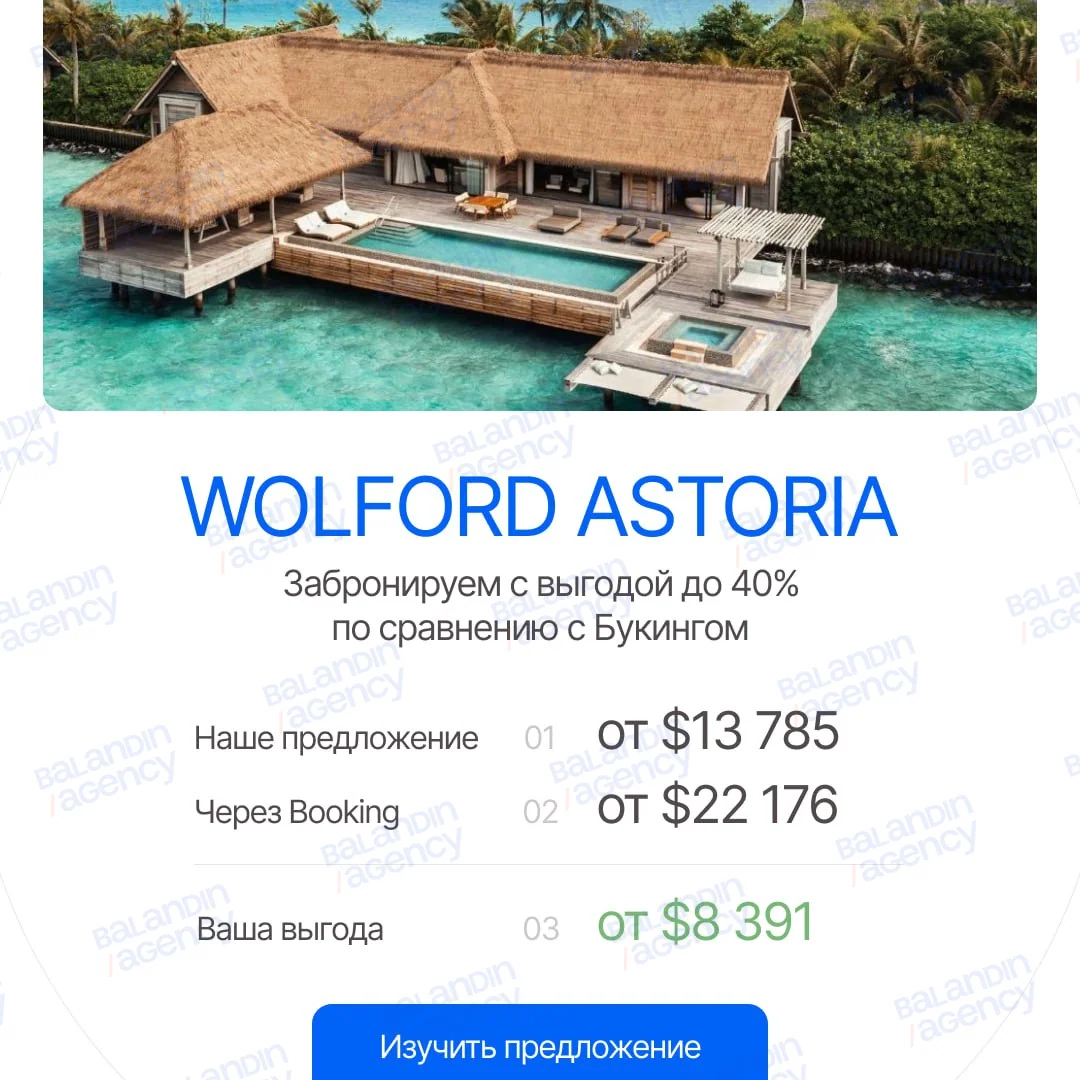
- “Up to 40% cheaper than Booking” offer in creatives. A “our price / via Booking / your saving” comparison on real villas. This saving is what kept the lead cost down: when we softened it to “10–30%” in January, leads vanished over a weekend, and we brought the 40% back.
- Geo split by city into separate ad sets. Dubai, Abu Dhabi, London, Belgrade, Tel Aviv at $10 a day each, so the cities did not compete and we could see where qualified leads came from. Tel Aviv was switched off within a week (Israeli citizens are banned from entering the Maldives), London in December (zero sales), Kazakhstan and Europe were added in November.
- Video beat statics. Two weeks in we launched simple vertical videos shot by the founders on a phone, plus cuts from their training course. Leads doubled, but the videos attracted a cheaper segment, so the ad copy stated “budget from $8,000 per week” outright.
- Lead sheet with statuses on the client side. Tilda form submissions went to a Telegram chat and a Google Sheet, where the client’s managers set “Qualified / Not qualified / Wrong number / Deal” and a comment. Every week we used this sheet to switch off the campaigns that brought non-qualified leads.

Results
October 2024 — February 2025, Meta Ads:
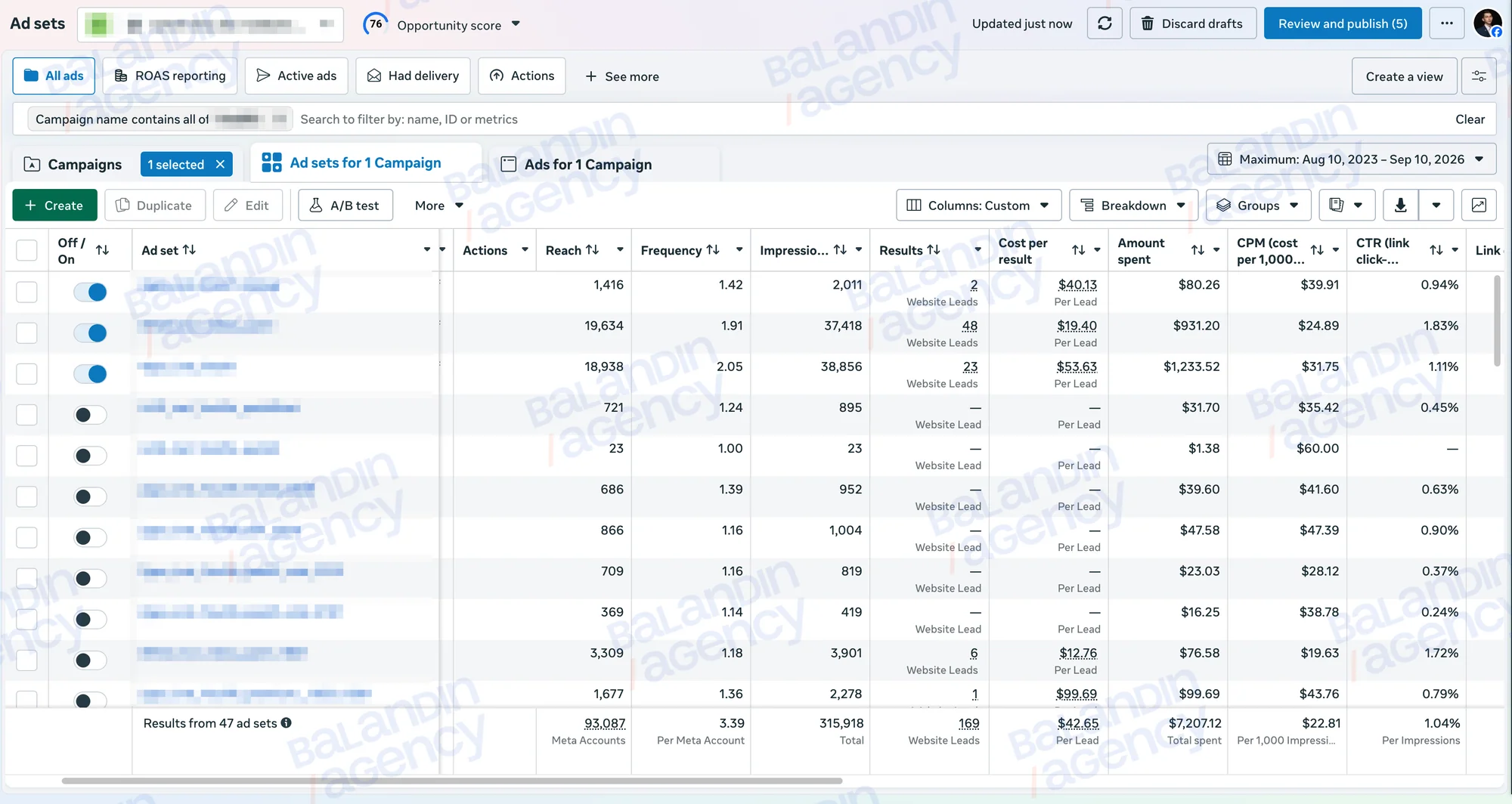
- Spend: $7,207.
- Leads: 174 at $41.
- Of them with a budget of $8,000+ (qualified by the client’s status): 79, at $91.
- Bookings: 4, average ticket $23,000. First payment on day 27 after launch.
- Booking revenue $92,600 on $7,207 spend — 1,185% ROMI.
Lead cost by geo: Dubai and UAE $50–100, adding Kazakhstan brought the average down to $25–37. Best ad sets: video creatives across 4 geos delivered leads at $12–22.
Insights
- The bottleneck in luxury lead gen is intake, not traffic. 33% of leads had wrong numbers (form without a phone mask), a third of qualified leads did not reply after three touches, managers changed, and “the only thing that helps start a dialogue is haggling on price”. For a $23,000 ticket, a cold lead needs a person who calls within minutes and takes them to a call.
- A strong offer sells the lead but creates an objection. “Up to 40%” brought leads at $25 instead of $50–100, but then in chats: “you said 40%, and this is not 40%”. No compromise was found: without the number the ads did not collect leads, with it some deals were lost on expectations.
- Geo = purchasing power and trust. London — zero sales, Kazakhstan — cheap leads from large families of 5–10 with a $5,000–10,000 budget. Dubai was the only city where leads turned into deals. Plus the payment barrier: people with accounts abroad choose a local agency to pay without transfers to Russia.
- Booking revenue is not the agency’s profit. The client earns a commission on the booking, not the whole amount: by their estimate the channel needs 20 sales a season to be profitable. They stopped at four and went to evaluate a switch to signature tours and Yandex. This case is honest about traffic and about where it runs into sales.