Private event advertising for a hotel brasserie in Manhattan (USA): $164,000 in closed revenue in 4 months, ROMI 2277%
How a venue with five event spaces in Midtown, which received inquiries only through referrals, filled its events calendar with Meta Ads and Google Ads
Updated:
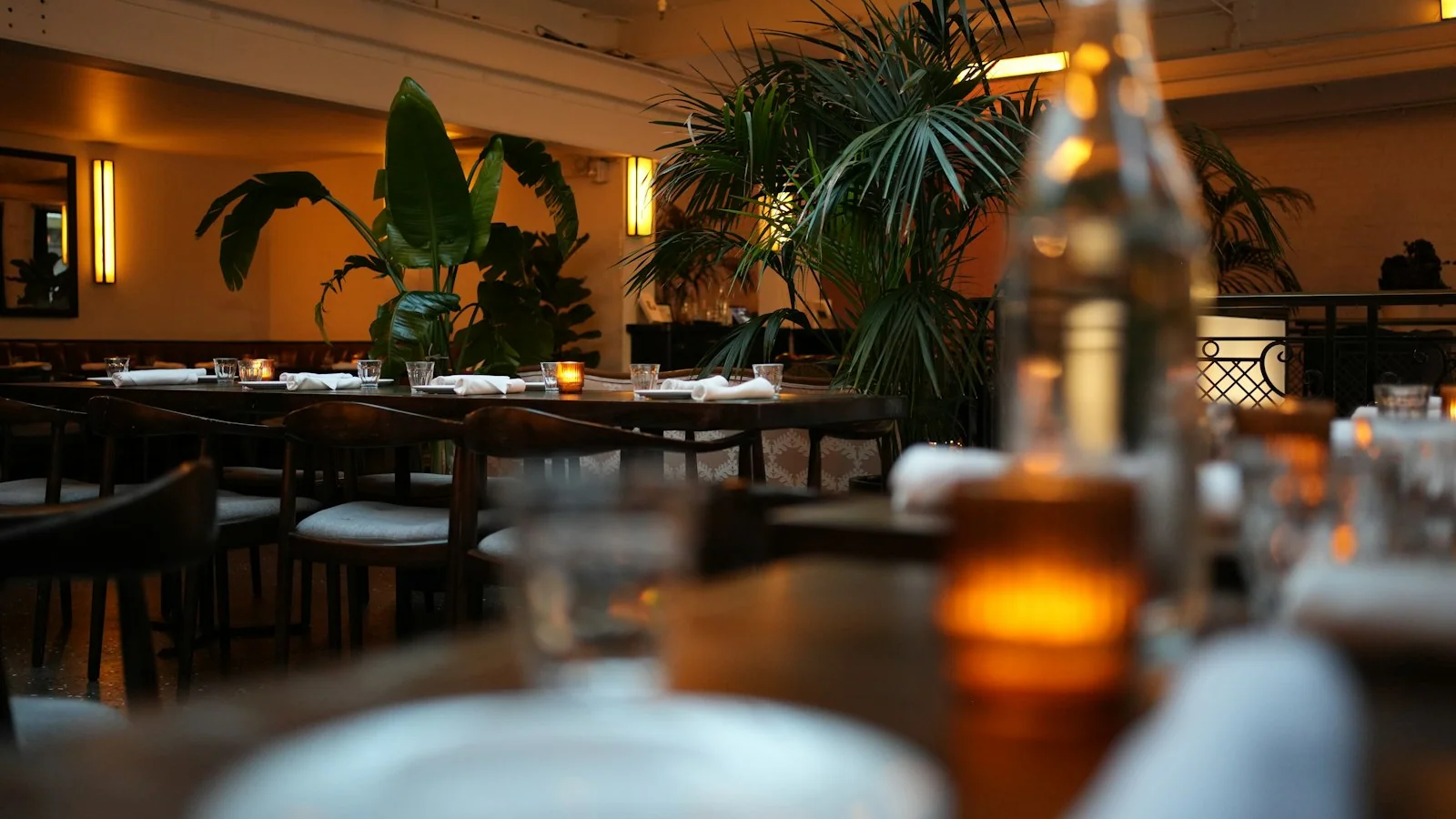
Illustration. Photo: Yimeng Zhao / Unsplash.
The task
A brasserie and cocktail bar in a landmark hotel in Midtown Manhattan. The venue seems made for events: five spaces with capacity from 8 to more than 200 guests and a bar the national press writes about.
What hurt:
- Nobody was creating demand. Inquiries arrived in two ways: through referrals and through the link in the Instagram bio. For a venue of this scale that is a trickle.
- The spaces stood empty although the product was ready. What was missing was not rooms or a kitchen but a system that brings people with a date and a guest count every week.
- It was unclear what brought bookings at all. Without tagging and a CRM connection there is no way to tell where an event came from.
We joined when the venue had already been operating for a long time. The task was to give the spaces a predictable flow of inquiries and to see which advertising brings closed events.
What we did
- Two channels with one goal. Meta Ads shows the venue to corporate planners and celebration hosts before they start searching. Google Ads catches those who are already typing “private event space NYC”. The intent differs, but the result needed is the same — a qualified lead.
- Tracking first, budget second. We put a UTM tag on every ad. The inquiry forms were wired into Tripleseat, the venue’s event CRM. We set up server-side conversion tracking to Meta through Stape. Now every closed event can be traced back to the click it started with. Without that, budgets are raised blind.
- Optimization for leads, not clicks. The campaigns learned from submitted forms: a real person with a real event date. From there the venue’s events team takes the lead.
Results
Four months, March — June 2026:
- Meta Ads — $82,000 in closed revenue on $3,200 of spend, ROMI about 2,460%.
- Google Ads — $83,000 in closed revenue on $3,700 of spend, ROMI about 2,140%.
- Combined — about $164,000 on a budget under $7,000, ROMI about 2,280%.
How we counted:
- Closed events only. Inquiries still in the pipeline are not in these numbers.
- Direct attribution only. If an event cannot be traced to an ad, it is not counted.
- A four-month window — in a business where events are booked months ahead.
There is a number we do not claim. Over the same four months organic inquiries — people who found the venue on Instagram and came through the bio link — grew by roughly 60%. Not a dollar was spent on that channel. Advertising warms up everything further down the funnel, but the link cannot be fully proven.
Insights
- Restaurants lose on measurement, not on ads. Advertising most often fails not because it does not work but because nobody can say which ads are working.
- Attribution removes the fear of budget. When you know which campaign closed a $15,000 buyout, raising spend stops being a gamble.
- Meta and Google do not compete. The first creates demand, the second captures it. The channels came out close in return: ROMI of about 2,460% for Meta and about 2,140% for Google.
- A modest budget does not prevent a result. Under $7,000 over four months was enough, because each event is worth thousands of dollars and the advertising worked only for leads.