Telegram channel for a business-idea validation expert (UK): 1,359 subscribers at $0.87, £5,500 revenue on a £1,542 budget, 257% ROMI
Updated:
The task
The client is a market-research and business-idea validation expert based in the UK. The starter product is a £50 guide, “how to validate an idea in two evenings with ChatGPT”; above it sit a £300 research package and custom work from $750. Before us, sales came from personal contacts and a small bot with warm leads. There was no regular source of new people.
We agreed to build sales through a Telegram channel: content at least five times a week, a minimum working funnel of “ads → channel → guide”, everything else added as needed. Month-one expectations were written down: 550–1,000 subscribers, 19–30 guide purchases, 1–3 leads for premium services. The economics were tight: about £200 a week for ads, plus the agency fee, and all of it had to pay back together.
What we did
Channel first, ads second. The first week went into the channel, not the ad account: we reviewed references, rewrote the pinned post, and agreed that premium services are sold in direct messages, not head-on to cold traffic. The client connected tgstat and the subscription-tracking bot so every subscription was tied to an ad.
Launching a fresh account patiently. For the first days Meta spent £0.30 a day: a new account with no history ramps up slowly. We did not touch bids or relaunch. A week later the account reached normal delivery, and the cost per subscriber fell from £1.70 to £0.74 within three weeks.
Creatives built from the client’s own posts. Banners and short videos voicing her texts, in the audience’s language and without info-business promises. At the client’s request we dropped wording about “payments every day”: the audience is thoughtful founders who need stories and context.
A second funnel: an article with a payment button. In parallel we tested a long-read on the site with a Tally payment form, put the pixel on the form and ran a minimal budget to it. It stayed an experiment; the main traffic went to the channel.
August: shifting focus from “subscriber” to the guide. We refreshed creatives, wrote a separate landing post for the guide, and built a bot sequence for subscribers who wanted the guide. Payments were matched against tracking tags to see which creatives brought buyers, not just subscribers.
Results
Over two months (June–August 2025):
- Ad budget £1,542 ($2,075); £3,257 including agency fees
- Revenue £5,500 from guides, research packages and the first premium services
- 257% ROMI on the ad budget; 69% including agency fees
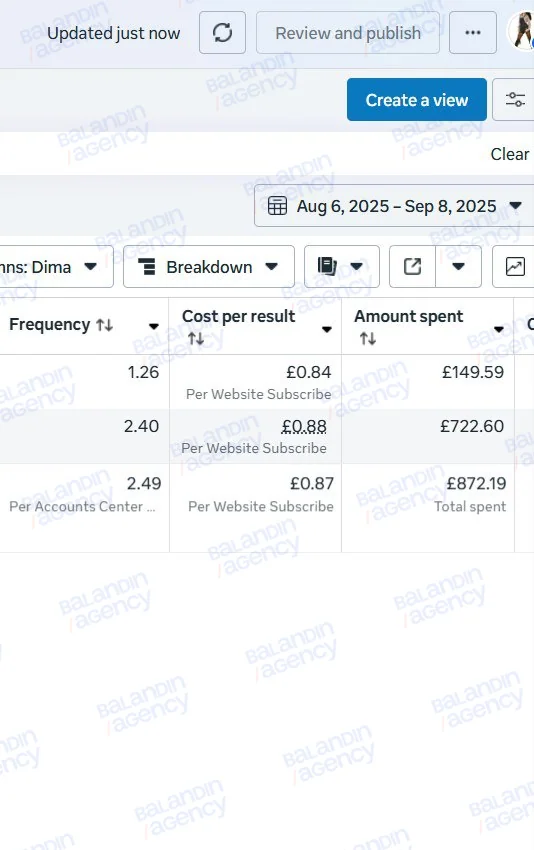
- 1,359 subscribers on the £872 ($1,191) subscriber budget — $0.87 per subscriber
- Cost per subscriber: £1.70 in week one → £0.74–0.84 by the end of month one, 222–263 subscribers a week on a £190–200 budget
- Month one: £1,050 revenue on £1,583 costs (ROAS 0.66); month two: £4,500 on £1,674 (ROAS 2.69)
The project continued: by October a subscriber cost £0.42 at 716 a week, and the month of 24 Sept–23 Oct brought 20 guides, three £300 research packages and a $750 client from the channel. In November the client paused traffic: there were not enough hands to handle inbound.
Insights
- Count payback together with the agency fee, not budget alone; with a £50 ticket the picture lies otherwise. Here it came together in month two: 0.66 → 2.69.
- A fresh account “sleeps” for the first week. Relaunching and tweaking bids resets learning; give it a week and the subscriber cost drops on its own.
- In a niche with a cheap starter, sales start with the product ladder, not traffic: the £50 guide pays for subscribers, the £300 and $750 tiers bring the money.
- On a small budget, creatives built from the client’s own posts beat “ad” copy: the subscriber comes for the author, not the offer.